How to choose a condenser microphone? Recommended microphone with good cost-effectiveness
Simply put, the working principle of a microphone is to convert sound signals into electrical signals, then transmit current to the amplifier, and finally reverse the process of converting the fluctuating current back into sound.
1、 Classification of microphones
Usually, according to the working principle of microphones, they can be divided into capacitive microphones and dynamic microphones.
The electrode of a condenser microphone is composed of two metal thin films, and the different spacing between the films causes different capacitance, hence it is called a capacitor microphone. Capacitor microphones have high directionality, and are commonly seen in recording studios as condenser microphones.
Dynamic microphones, on the other hand, use the principle of electromagnetic induction to cut magnetic induction lines in a magnetic field and convert sound signals into electrical signals. The sensitivity of dynamic microphones is not as high as that of capacitive microphones, making it difficult to pick up ambient sound. Therefore, they are commonly used in stage performances, etc.
With the popularity of short video, live streaming, and karaoke software, some functional microphones have also emerged, such as USB microphones, karaoke wireless microphones, audio microphones, etc. These microphones can be said to have higher integration, strong compatibility, and more convenient use.
2、 Some indicators of microphones
There are many parameters for measuring the quality of a microphone. Here are some common indicators:
1. Sensitivity
Sensitivity refers to the acoustic to electrical conversion efficiency of a microphone, in millivolts per pascal. A microphone with high sensitivity can provide a higher input level, thereby improving the signal-to-noise ratio.
2. Directionality
The directionality of a microphone indicates its sound receiving range, which can be represented by a directional graph. We can choose microphones with different directionality based on different sound sources.
Omnidirectional: It can collect a 360 degree circle of sound, suitable for recording choral performances.
Cardioid pointing: The most common type of pointing is to pick up the sound source directly in front to the greatest extent possible, which can suppress the sound behind and to the side. This type of microphone is also commonly used for recording.
8-character pointing: Effectively picking up front and back sounds, suitable for recording duets with two people.
In addition, there are strong cardioid pointing and supercardioid pointing for long-distance pickup, which will not be specifically discussed here.
3. Frequency response
The frequency response reflects whether the output signal of the microphone changes with the frequency when it receives sound at different frequencies, representing whether the output signal can truly present the characteristics of the original sound.
4. Signal to noise ratio
The signal-to-noise ratio, as we often refer to it, represents the ratio of the output signal voltage of the microphone to the internal noise voltage. The higher the signal-to-noise ratio, the less clutter mixed in the signal, and the better the sound restoration quality.
5. Dynamic range
The dynamic range refers to the electrical frequency difference between the maximum undistorted signal output by the microphone and the minimum useful signal output. A too small dynamic range can cause sound distortion.
3、 How to select a microphone
The above mentioned some indicators of the microphone, but the indicators cannot explain everything. It is still necessary to choose based on one's own actual situation. Just like condenser microphones may not necessarily be better than dynamic microphones, it should be said that these two types of microphones are not good or bad, and should be selected based on their own usage scenarios.
For example, capacitor microphones have high sensitivity and reproducibility, making them suitable for recording in recording studios, instrument pickup, and video anchors. But it also has high requirements for the recording environment.
The sensitivity of the dynamic microphone is not high, so it is not easy to pick up environmental noise, so it is suitable for use on stage and is not prone to whistling. And the dynamic microphone is also more durable.
Nowadays, USB microphones are very common among broadcasters, which integrate the sound card and microphone together, making them plug and play. They are easy to use and have good results, so they are very popular.
Perhaps some people may confuse sound cards with microphones, but in fact, there are two types of sound cards we often refer to: live streaming sound cards and professional recording sound cards. The live broadcast sound card comes with various entertainment effects and has strong compatibility. For an introduction and purchase of sound cards, please refer to the article:
Professional recording sound cards generally have a higher price point. Recording sound cards typically support ASIO and have a DSP effector. The matching microphone is called an XLR condenser microphone, which is connected to an external sound card through a Canon interface and requires a 48V phantom power supply. The operation is relatively complex, making it suitable for more professional recording and live streaming. If you are afraid of trouble and want to have professional recording effects, another solution is to choose a professional recording pen and import the recorded audio files to your computer for processing using software such as Audit and Protocols.
So when choosing a microphone, everyone should also consider which device they are recording sound on. For example, when recording on a computer, you can choose a USB condenser microphone; You can choose a condenser microphone with a small diaphragm on your phone; For professional audio recording, you can choose a condenser microphone with a large diaphragm to use with a recording sound card.
Of course, in order to meet various usage scenarios, some professional microphones can also be compatible with various usage scenarios, from low-end to high-end. Built in earphone monitoring, automatic level mode, real-time improvement of live streaming and recording quality.
Next, we will introduce a few professional microphones that are not very expensive but of very good quality, from the 797 Audio.
Firstly, D501 USB condenser microphone

Using a 16mm condenser microphone head, with cardioid directionality
Sensitivity: -17dBFS/Pa (1kHz, Gain 0dB)
Signal to Noise Ratio (dB): 65dB (A-wt)
Microphone Gain Range: -14dB~+21dB
Sampling rate: 96kHZ
Equipped with earphone monitoring function
Simply connect a USB cable to a computer or phone to use it
The exterior design is retro and elegant, with a simple body
Clear sound with low noise
Suitable for live streaming, recording, singing, and providing authentic and clear native recordings
Suitable for beginners at the entry-level
Accessories: microphone, shock absorber, windshield, data cable
The price is between USD 35.5-50
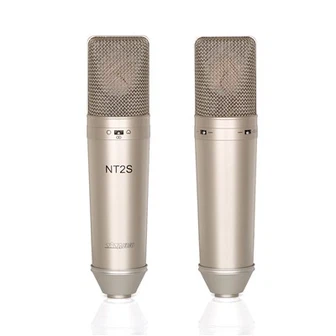
Secondly, NT2S condenser microphone

Metal body shell, simple and elegant design
Very textured
3-pin XLR connector
3 polar patterns: cardoid, omni and figure-8
Optimized circuit adds F-8 pickup pattern to the microphone and increases sensitivity up to -32dB
Gold sputtered mylar radiagm
48V DC phantom powered, transformer less output
High sensitivity, low noise and destruction, and extended frequency range
Switchable -10dB pre engagement and low FQ roll off
Three directions: Omni, Cardiord and Figure-8
Suitable for vocal, instruments and all other professional recording applications, live streaming, video production, recording, interviews, and other scenarios
Machine accessories: microphone, cable, shock absorber, windshield
The price is between USD52.38-USD79
Thirdly, CR711 USB tube condenser microphone

This condenser microphone flashes when turned on,
Very beautiful
Simple and textured body design
The 1.1 inch large diameter gold plated sound head perfectly captures every detail of the sound
Unique 5V power supply system, abandoning traditional specialized power boxes for high voltage power supply
Suitable for USB 5V interface DC power supply, simple and convenient operation
Selected electronic tube components make the sound soft and more beautiful
A designated and elegant exterior design, incorporating self-developed shielding systems,
Effectively suppress various types of electromagnetic interference
Optional shock absorbers, windshields and other accessories can meet your personal music dreams quickly
Suitable for professional recording scenarios such as professional recording, video, live streaming, interviews, etc., with clear and rounded recordings.
The price is between USD69-99/set
Fourth, CR727 electronic tube microphone

Using 34mm Large Diaphragm Capsule,
Noise reduction, high sensitivity, 9 directionalities
7-Pin XLR
High qualified 6um mylar diaphragms, 1 '' center terminated capsule is adapted in the series With its warm tuned sound reproduction performance, ATCR02 is understood to be a good choice for professional audio recordings and live stage applications
Suitable for recording scenes with high requirements for sound quality, many professional recording institutions choose this microphone, including singer, television broadcasting, video creation, live streaming and other scenes.
Accessories: microphone, cable, shock absorber, windshield, power box, etc
The price is between USD130 and USD150/set
The above is a highly cost-effective condenser microphone that I recommend to everyone.