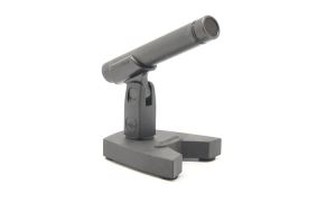
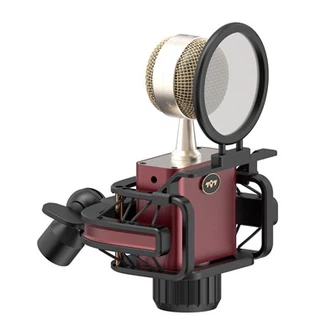
What is a microphone
The microphone, also called"Mic". The microphone is a energy conversion device that converts the sound signal into a telephoto signal. There are dynamic, capacitors, residents, and recent emerging silicon microphones, and liquid speakers and laser microphones. Most microphone is a microphone of the polar body capacitor. The working principle of its working principle is to use a polymerized film with permanent charge isolation

Several types of microphone are used today, which employ different methods to convert the air pressure variations of a sound wave to an electrical signal. The most common are the dynamic microphone, which uses a coil of wire suspended in a magnetic field; the condenser microphone, which uses the vibrating diaphragm as a capacitor plate; and the contact microphone, which uses a crystal of piezoelectric material. Microphones typically need to be connected to a preamplifier before the signal can be recorded or reproduced.
Microphone classification
The microphone can be divided into two types: electric microphone and capacitance microphone according to their transformation principles. Among them, electric categories can be subdivided into dynamic microphones and aluminum band microphones.
Common commercial microphone types include capacitive microphone, crystal microphone carbonic microphone, and dynamic microphones. There are two types of energy sources used for commonly used capacitive microphones: DC bias power and Zhizhe film. These two kinds of capacitive microphones and crystal microphones are converted to electrical energy to generate a change of electric field. The carbon microphone uses a DC voltage source, changing its resistance by sound vibration, thereby converting the sound signal into a electrical signal. Capacitors, crystals, and carbon microphones all generate a voltage signal that displays a sensitive membrane into a sensitive membrane, while the dynamic microphone generates a voltage signal positively proportional to the vibration rate of the sensitive membrane. The dynamic microphone uses permanent magnet as the energy source, and the sound energy is converted to electrical energy based on the inductor effect
How do microphones work?
The most common type of microphone, the dynamic microphone, uses a coil suspended in a magnetic field that may be attached to multiple membranes for extended frequency response.
Dynamic microphones use electrical energy in the form of induction to produce the audio signal. These microphones are well suited to stage performance.
The microphone capsule contains a small diaphragm connected to a moving coil. When sound waves hit the diaphragm, it vibrates. This causes the coil to move back and forth in the magnet's field, generating an electrical current.
However, how a microphone works ultimately varies depending on its designed purpose.
One of the main considerations, aside from the type of device, is what is being recorded. The directionality of microphones is another consideration in microphone design.
Microphone Features
Most microphones are the electrical capacitor microphone (ECM), which has a history of decades. The working principle of ECM is to use a polymerized material vibration film with permanent charge isolation. Compared with ECM's polymerization materials vibration membrane, the performance of MEMS microphone at different temperatures is very stable and will not be affected by temperature, vibration, humidity and time. Due to strong heat resistance, the MEMS microphone can withstand high temperature back welding of 260 ° C, and the performance will not change. Because the sensitivity before and after assembly changes very little, this can even save audio debugging costs in the manufacturing process. At present, the integrated circuit process is becoming more and more widely used in the manufacturing of sensors and sensor interface integrated circuits. This micro -manufacturing process has the advantages of accurate, flexible design, miniaturization, and the integration of signal processing circuits, low cost, and large -scale production. Early miniature microphone was based on the pressure resistance effect. Some research reports said that the microphone with a sensitive film with (1 × 1) CM2 and 2μm thick polycrystalline silicon membrane was produced. However, without stress in the sensitive membrane, the first resonance frequency of a large and thin polycrystalline silicon membrane will be lower than 300Hz. The first -order resonance frequency will cause the microphone's frequency of the microphone within the range of the hearing frequency range within such a low frequency band (the change in sensitivity is greater than 40dB), which is unacceptable to the microphone application. When there is tension in the sensitive membrane, its resonance frequency will increase, but the price of sacrifice sensitivity will be increased. Of course, the size of the sensitive membrane can be obtained by adjusting the size of the sensitive film, but this will still reduce the sensitivity. It can be seen that the pressure -resistant scheme is not suitable for the manufacturing of micro microphones.
A feasible solution is to use a capacitive solution to create a micro microphone. The advantage of this method is that all materials used in the integrated circuit manufacturing process can be used for the manufacture of sensors. However, it is quite difficult to use a single -chip process to manufacture micro -microphone, because the air medium between the two capacitor plates can only have a small interval. Moreover, due to the limit of size, the bias voltage is difficult to meet in some applications. Based on the above problems, the research on capacitive microphones has not been interrupted.
Compared with the traditional molecular microphone, the micro-Electro-MEChanical Systems (MEMS) microphone (MEMS) microphone has the advantages of small size, good thermal resistance, good consistency, high stability, high reliability, anti-radio frequency interference interference. It can also output digital signals and help intelligent development. The market size has maintained rapid growth in the past 10 years. Various emerging applications have emerged endlessly. From smartphones to smart speakers, to real wireless stereo (TWS), True Wireless Stereo (TWS) earphone.

Working principle of Microphone
At the beginning of the 20th century, the microphone developed from the initial transformation of the sound and electrical transformation through the resistance to inductance and capacitance. A large number of new microphone technology gradually developed, including aluminum driving circles, as well as currently widely used capacitor microphone and resident microphone microphone Essence The working principle of the circle microphone is to vibrate the vocal vocal vocal, and then the magnetic field cutting of the electromagnetic coil winding on the shock membrane and the magnets surrounded by the moving ring wheat head to form a weak fluctuation current. The current is transported to the loudspeaker, and the fluctuation current is turned into sounds in the opposite process.
Aluminum microphone
For the aluminum strip of microphone, the aluminum belt used is both a microphone film and a conductor that moves in the magnetic field. Aluminum belt is usually made of aluminum, with 0 ~ 1 mm thick, 2 mm to 4 mm wide, and the mass is only 0.2 mg to achieve a better transient response. In order to obtain the ideal resonance frequency between 2KHz and 4KHz, the aluminum belt is made into wrinkles to maintain a precise tension value. As a conductor and microphone film, the aluminum belt is suspended in the magnetic field in the middle of the two magnetic poles. It vibrates with the frequency of the ejaculation of the ejaculation. At the same time, it generates a certain voltage output at both ends of the aluminum belt.
Capacitance
The capacitive microphone has two metal pole plates, one of which is coated with a chi -alignable film (mostly polyfluorophyl) and ground it, and the other is connected to the grille, grid and source of the field effect crystal tube. There is a diode in the extreme. When the polar membrane itself has a charge, the surface charge of the surface is Q, and the land power capacity of the plate pole is C. The land voltage u = Q/C is generated on the polar head. Because the vibration changes the distance between the polar plates, that is, the capacitance C changes, and the power Q unchanged will cause the voltage change and the voltage changes, reflect the strength of the external sound voltage. The frequency of external sounds is the principle of working in the polar vocal transmission.
Most of the diaphragms of capacitive microphones are mostly polyfluorophytte, and their humidity performance is good, the surface charges generate are large, and the humidity is small. Since this kind of microphone is also a capacitive structure, the signal has a very large internal resistance. In order to export the voltage signal generated by the sound and amplify it, the output must also use the field effects crystal tube